
Utica Neighbors: Records Around a Block
Different Utica sources answer different block questions. A parcel map can show where parcels meet. A tax record can show assessment information and owner or mailing fields. A City directory can show a dated printed listing. An association name can describe community context. None is a complete list of the people who live nearby. Keeping the source, date, and record role visible makes the result useful without turning a block search into a personal profile.
| Source | What It Shows About a Block | Access |
|---|---|---|
| Oneida County parcel viewer | Parcel shape, mapped address, owner, value, acreage, imagery, and listed layers | Official interactive map |
| Utica tax and assessment sources | Property and assessment fields, including distinct situs and mailing information | City portal and annual roll |
| New York Voter Lookup | An individual voter's election information when required fields are supplied | State form and Board of Elections procedure |
| City-listed associations | Community context from the official association-name list | City community page |
| UPL city directories and maps | Dated historic address and block context | Digital scans and institutional research access |
An owner field and a person living at an address are not interchangeable. The City assessment roll itself distinguishes property location from an owner mailing address. A current mailing address can differ from the parcel, and neither field is a finding about every member of a household. Note: A dated directory entry stays historical evidence even when the street name still exists.
Utica Neighbors on Parcel Maps
The Oneida County interactive mapping page leads to the County's tax-parcel viewer. County materials describe parcel owner, address, assessed value, acreage, aerial imagery, and selectable layers for floodplains, wetlands, contours, school districts, sewers, and soils. That mix is useful for understanding how a Utica block is laid out and whether an address sits near a mapped feature. The reviewed materials do not document a people-search mode or a verified association-boundary layer.
The County mapping entry page is the official starting point for a parcel-based Utica neighbors search.
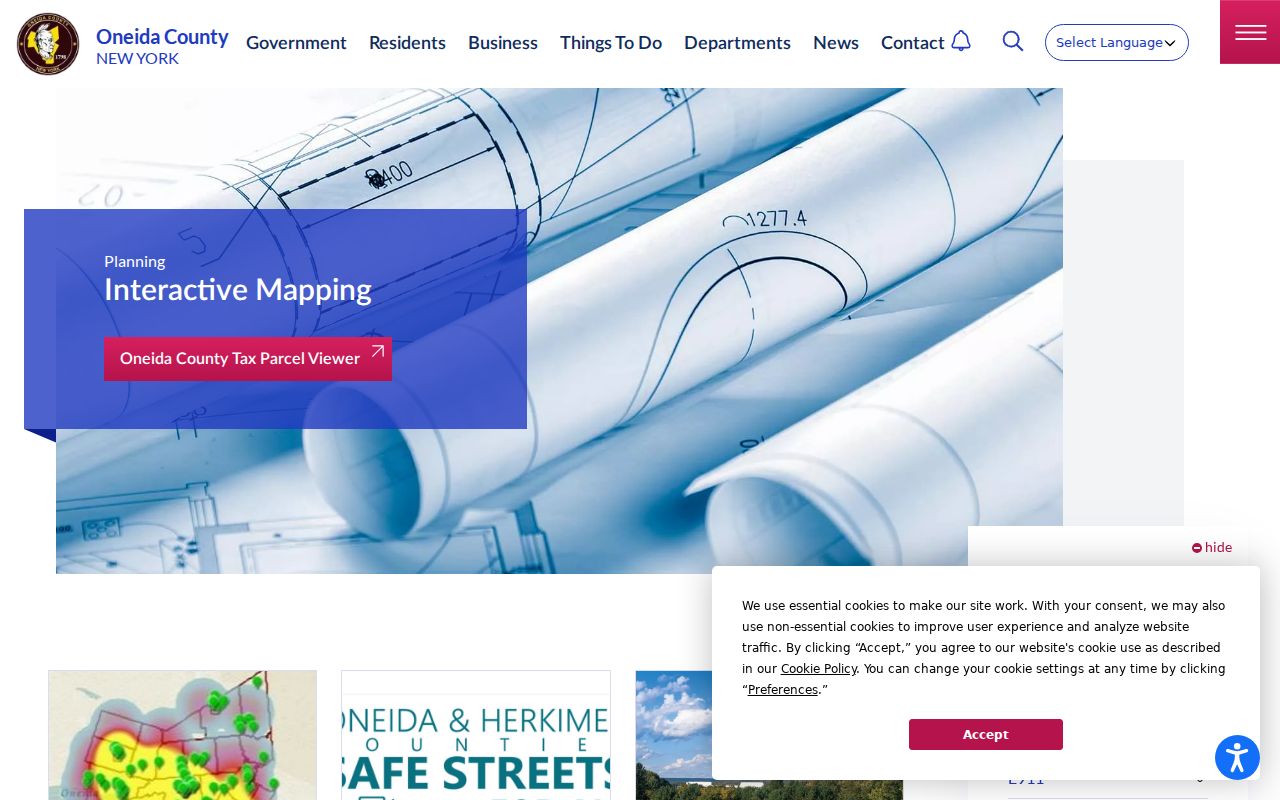
Open the map with a known address, then read each displayed parcel as land-record context. Adjoining lines on a map do not show friendships, household membership, or consent to contact.
Utica Neighbors and Associations
The City of Utica community page names seven associations: Baggs Square, Cornhill, Oneida Square, North Utica, East Utica Concerned Citizens, South Utica, and West Utica Concerned Citizens. These names can help a reader recognize local civic context around a block. The reviewed City source does not provide association officer rosters, member lists, or authoritative boundary polygons, so it is better to use the names as starting points and verify a particular street with City or association contacts.
The City association list is a helpful orientation source for Utica neighbors research.
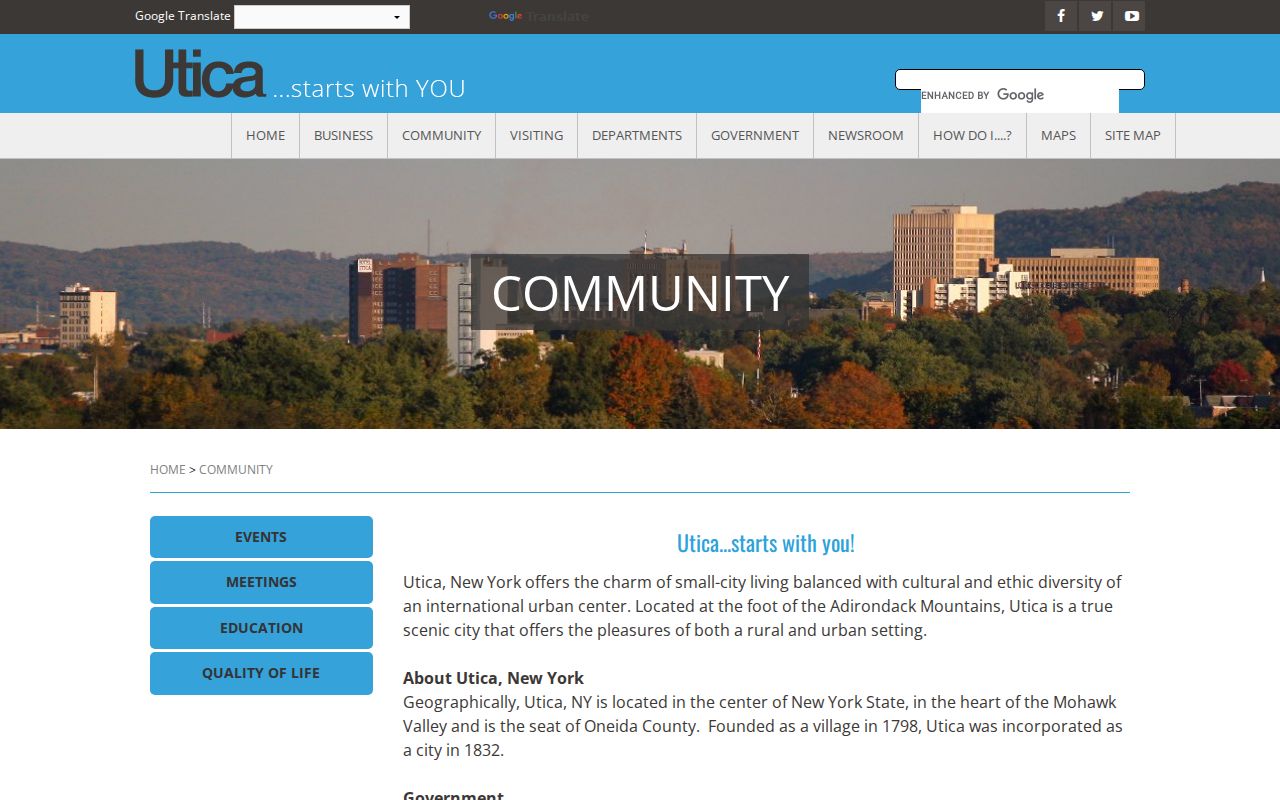
The image supports the City-listed association context. It does not convert any association name into a parcel-by-parcel boundary claim.
| City-listed Utica association context | Safe use |
|---|---|
| Baggs Square, Cornhill, Oneida Square, North Utica | Use the City page and parcel map to begin geographic research. |
| East Utica Concerned Citizens, South Utica, West Utica Concerned Citizens | Confirm any specific street or organization contact through an official local route. |
Utica Neighbors Need Source-by-Source Reading
Official records and commercial neighbor-search categories serve different purposes. The official route identifies the custodian, record date, and field meaning. It also shows its limits. A generic commercial result may combine stale or unrelated entries and may not disclose which source produced a name. For a Utica block question, a City tax field, County parcel layer, and dated directory should be compared only after their terms and dates are recorded.
| Official local route | Commercial neighbor-search category |
|---|---|
| Shows the custodian, date, and specific record type. | May not identify the original record or the date of collection. |
| Separates parcel owner, mailing field, and historic listing. | Can blur unlike facts into a single profile. |
| Requires a focused address, parcel, or documented records request. | Does not replace a current record or an authorized custodian response. |
For personal, civic, or family-history research, the local route is slower only when the question is vague. A precise address and time period often point directly to the right Utica office.
Map a Utica Block From One Address
Use an address as a geographic starting point, then keep each adjoining parcel in a separate note. The City tax route accepts a house number and street name, parcel ID, or bill number. Its street-name instruction omits suffixes such as ST, AVE, and LN. The City assessment record may add a parcel number and owner or mailing fields. From there, the County viewer provides the spatial connection between the reference parcel and nearby parcels.
- Search the known address in the City tax route or locate it in the County parcel viewer.
- Record the target parcel and the immediately adjoining parcel labels, along with the source date.
- Check whether a City assessment field is property location, owner name, or mailing address before comparing it with another source.
- Use a dated directory or historic map only when the question concerns an earlier block, keeping its edition year separate from current parcel data.
When the research moves beyond the immediate block to an entire named road, the Utica street records route gives the broader address, deed, and records sequence. A block method should not be stretched into a streetwide claim.
Utica Block Questions Can Use Focused FOIL
Parcel data is not the only public route around a Utica block. A question about a defined public project, inspection, meeting, or municipal file may belong with the City custodian. Under New York FOIL, a focused request for an existing record works better than a request for every record about a person or a whole neighborhood. Describe the City department, address or parcel, document class, and date range. The City Clerk is the Records Access Officer for municipal requests.
The Oneida County FOIL guidance likewise asks for names, dates, descriptions, and the department that holds the record. It offers inspection, electronic delivery, or copies and describes a 25-cent ordinary-copy charge.
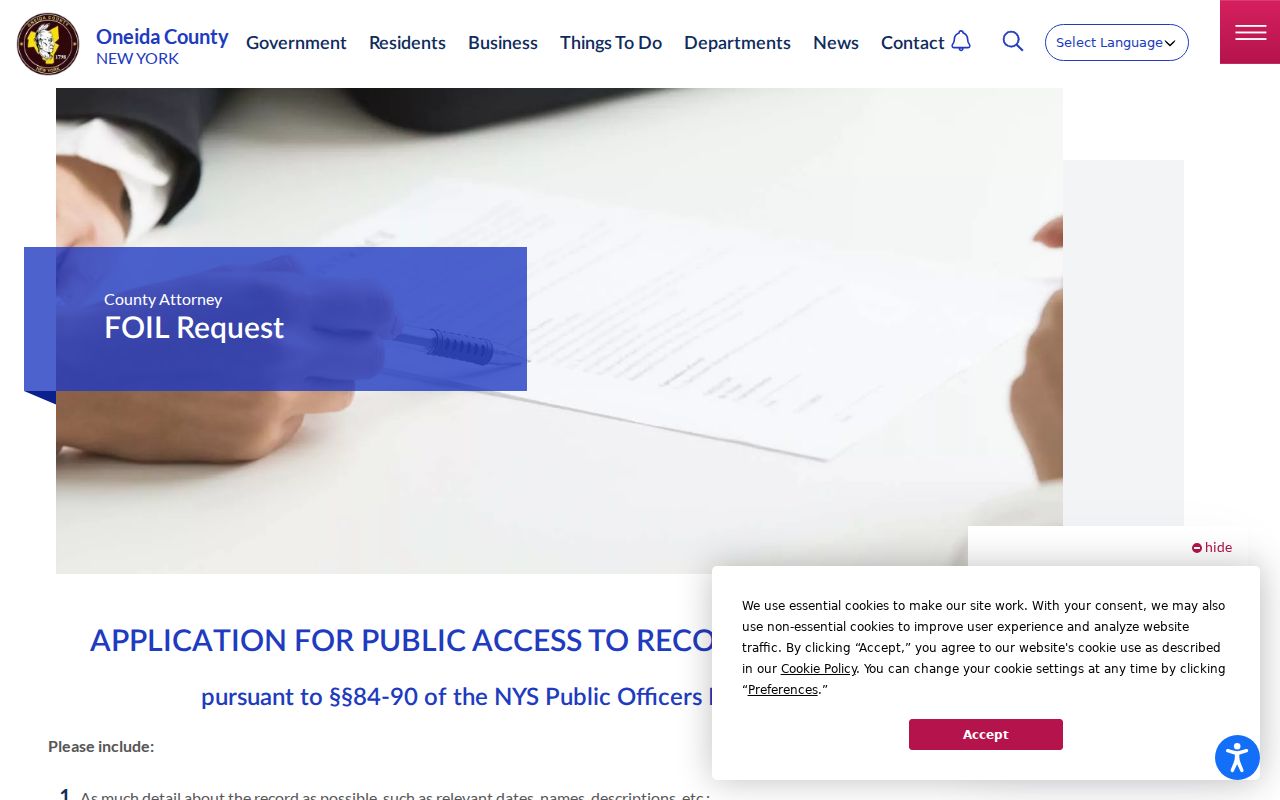
Use County FOIL for an administrative record not otherwise available from a specific Clerk, map, or City department route. A request is not a promise that every requested detail is public.
Utica Neighbors in Historical Sources
A historic block needs its own evidence trail. The Utica Public Library has selected digitized city directories from 1817 through 1951, with gaps, and newspapers beginning in 1825 in its genealogy holdings. The Library of Congress 1884 Sanborn collection is a dated building and street snapshot. Pair a directory edition with a map sheet close in time, then compare cross streets and address clues. Do not assume an old number converts cleanly to a present number because the research found no authoritative Utica-wide renumbering table.
The County's E911 guidance explains modern address assignment, including general odd/even side conventions and a change process. It is useful contemporary address context, not proof of a historical number. Mark a comparison as documented, probable, or unresolved according to the records that actually support it.
Utica Neighbors and Voter Record Boundaries
The New York Voter Lookup is not an address roster for a Utica block. It asks for County, last name, first name, date of birth, and ZIP Code, then provides an individual registered voter's election information. That field design does not support browsing nearby addresses. Registration records have their own access rules, and a postal code or parcel boundary does not change the purpose of the system.
New York Election Law §3-220 makes registration records generally public under staff supervision while excluding protected identifying material, including driver-license or non-driver ID information, Social Security information, and certain application images. Election Law §5-508 protects qualifying confidential registrations. The Oneida County Board of Elections, at Union Station, handles local registration status, district, ballot, and procedure questions. The office route is more reliable than trying to infer election geography from a Utica ZIP or association name.
A State voter-file request follows another controlled path. State Board of Elections FOIL guidance says the request must state the election purpose required by Election Law §3-103(5), and it describes State or multi-district data separately from the individual lookup form. That limitation matters when researching a Utica block: a public-record rule does not create permission to assemble or use a neighborhood people list outside the purpose and procedure set by the custodian. Keep the query narrow, record the source date, and ask the Board about authorized access when the individual form cannot answer the question.
The Oneida County office lists weekday hours of 8:30 a.m. to 4:30 p.m. and is the correct local contact when a voter needs registration or district help. Its staff can explain the official route for a question that the statewide form does not answer. That channel preserves the distinction between election administration, postal geography, and property research.
Utica Neighbor Lookup Privacy Limits
New York restricts several categories that could otherwise be mistaken for neighborhood data. Vital records have eligibility rules. Courts exclude sealed and protected matters. The Address Confidentiality Program provides a substitute address for qualifying participants, and Election Law §5-508 protects qualifying confidential registrations. Vehicle data also has Driver's Privacy Protection Act limits. A visible map point or tax field is never a workaround for protected information.
Lawful use. Use Utica neighbor records for personal, civic, or family-history research only. Do not use an address, map, or public record to watch, stalk, harass, intimidate, or harm anyone.
For an urgent safety concern, contact emergency services. For a records question, ask the office that holds the record about its authorized access procedure.