
Finding Utica Residents by Record
Utica residents leave several kinds of dated public traces. A street address belongs first with City assessment and tax material. A name tied to a sale, mortgage, judgment, or map belongs with the Oneida County Clerk. An old address belongs with directory volumes. Administrative records stay with City departments. Keeping those roles separate is what makes a Utica residents directory work. A parcel record sets land context. A deed names its recorded parties. A printed directory places a name at an address for one edition only.
Start with the sharpest detail you have. For a recent address, keep the house number, street spelling, parcel number, and source date exact. For a historic name, keep the edition year and the printed spelling. No single record proves a whole household story. A property location can differ from an owner mailing address, and a historic listing says nothing about today, so lean on a second source whenever a conclusion depends on identity.
- For a current Utica property question, use the City tax route or annual assessment roll to identify the parcel and distinguish property location from mailing fields.
- For a named Utica recorded-document question, use the County Clerk instructions, then review the actual document or public-terminal result.
- For a voter-status question, use the individual fields required by the State form or contact the Oneida County Board of Elections.
- For a past Utica household, select the closest available Utica directory year and compare adjacent editions when they exist.
- For a non-posted City or County record, ask the custodian which request route applies and describe the record, date range, and location narrowly.
Utica Offices for Resident Records
Matching the office to the question saves time. The County Clerk files instruments and holds the county's historical material. The City Assessor keeps the annual roll. The Board of Elections handles registration. The City Clerk is the Records Access Officer. These Utica offices share no combined residents directory, so the record category and source date should travel with every note. For deed and court filings, the Oneida County Clerk maintains the county office of record.
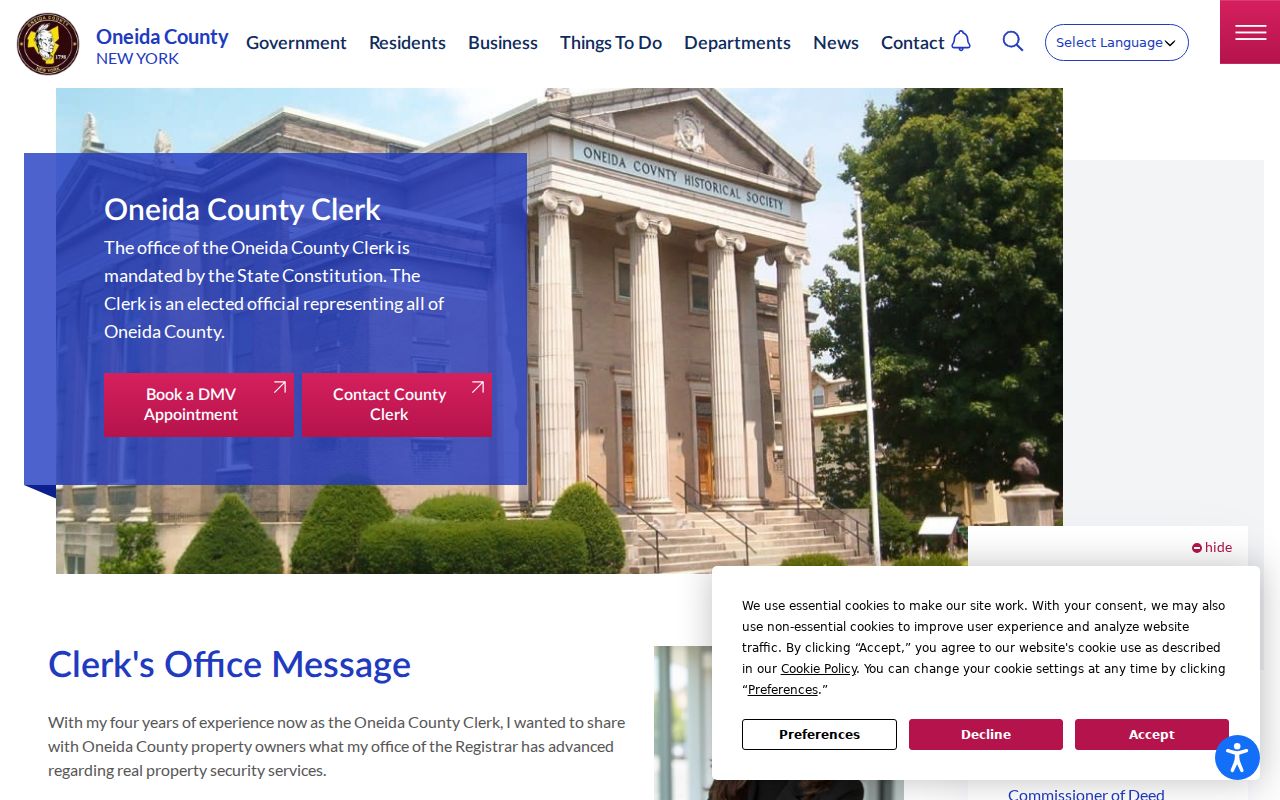
Deed, judgment, map, and historic-record questions all route to the Clerk. It points users to its own search and request channels.
Oneida County Clerk
800 Park Avenue
Utica, NY 13501
(315) 798-5776
County Clerk records and office details
City of Utica Assessor
1 Kennedy Plaza
Utica, NY 13502
(315) 792-0125
Utica property-search gateway
Oneida County Board of Elections
321 Main Street, third floor
Utica, NY 13501
(315) 798-5765
Utica Tax Records by Field
The Utica tax self-service form takes one route at a time: house number and street name, parcel ID, or bill number. Utica says to drop street suffixes such as ST, AVE, or LN. Posted tax history starts with fiscal year 2011/12. It is a strong parcel and bill tool. It is not a complete residents directory. It will not match an address to a person by itself.
| Utica field | Input format | When to use it | Important limit |
|---|---|---|---|
| House number | Number in its own field | Start an address search | Pair it with the street-name field |
| Street name | Name without ST, AVE, or LN | Find a Utica street record | Exact spelling can affect results |
| Parcel ID | Local parcel identifier | Connect a known Utica parcel | It is not an individual identifier |
| Bill number | Bill reference | Review a known tax bill | It does not identify a household |
The City of Utica Assessor is the official entry point.
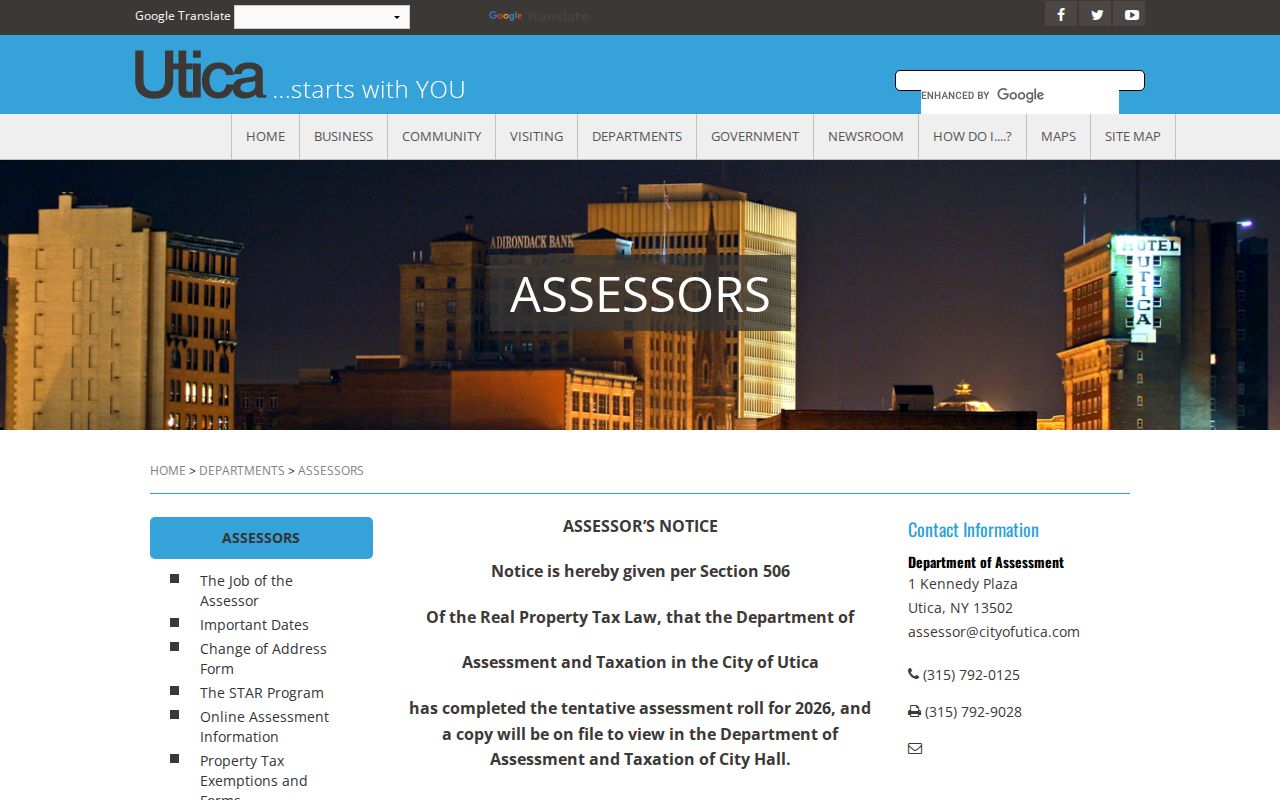
A Utica assessment record can carry owner and mailing fields, property location, class, assessment, exemptions, parcel data, market value, and deed references. Read each field for what it says. A mailing address is not a property location. Don't merge the two.
Note: A Utica tax result is a dated property record, not proof of who lives in a household now.
Utica Deed Index Routes
Utica deed research runs through the County Clerk. County instructions point a guest user to SearchIQS. The verified path is Party 1, last name first, with the DEED document description. Match results by name, date, and town. A deed is a recorded instrument, and its parties are simply the names printed on that transaction. They prove neither present residence nor full ownership. The County public-record search and request guide describes the fuller Utica access ladder.
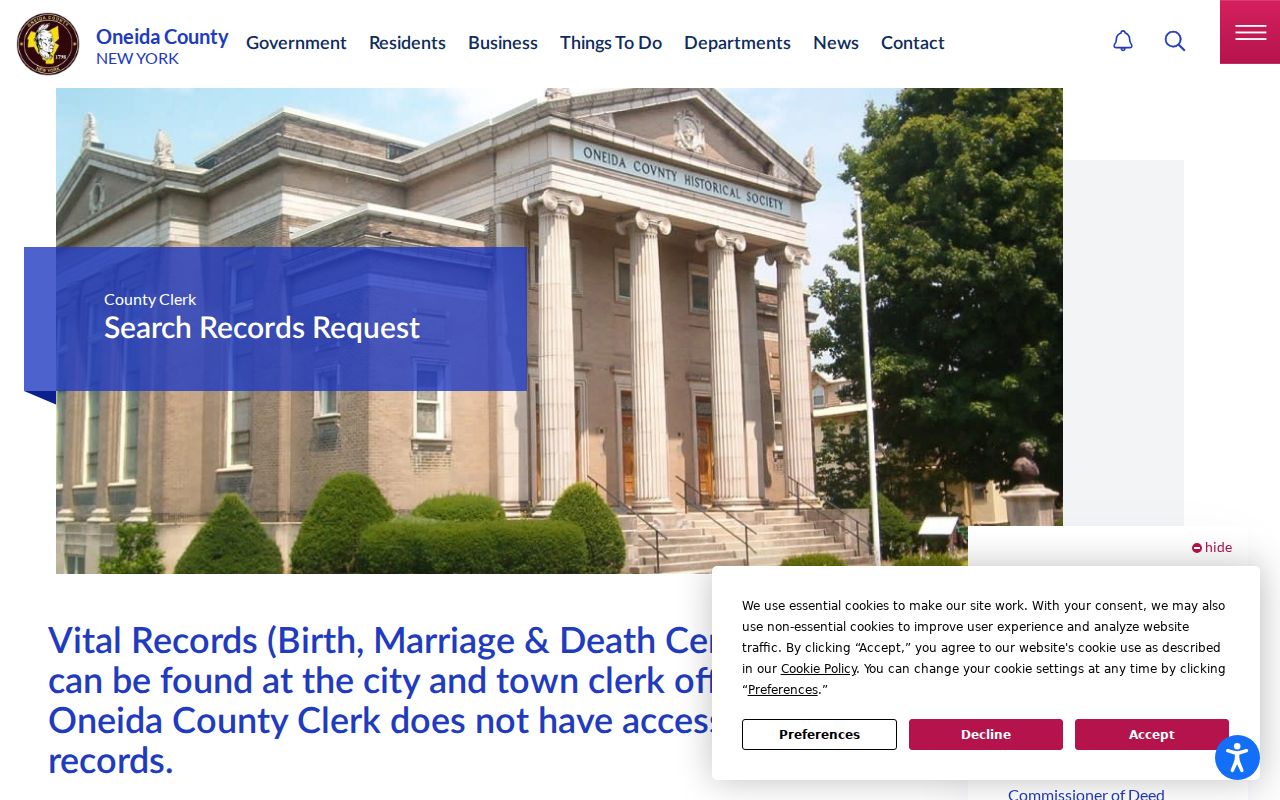
The County's online route covers Utica land records and judgments from the early 1990s forward. A miss online is not the end. Free public-computer research, archival books, a directed mail search, or a known-document copy request can finish the job. Copies cost 65 cents per page. The minimum is $1.30. A directed search prices by the name, time period, and record category.
- Party 1
- The County instruction label for the name field used in its documented guest deed-search path.
- Deed
- A recorded instrument transferring an interest in land. It names parties to that recorded transaction.
- Liber and page
- A traditional book-and-page reference that may help locate a known County record or copy request.
- Public terminal
- An in-person Clerk research computer, useful when the online index or image does not answer the Utica question.
Utica Parcel Maps and Residents
Oneida County's parcel viewer puts a Utica address on the map. Owner, address, assessed value, and acreage appear beside it. Extra layers show floodplains, wetlands, contours, school districts, sewers, and soils. A researcher can study a parcel's shape this way. A boundary line or a mapped feature can be studied the same way. Still, the viewer has limits. A parcel label is not a residents directory. It cannot prove a named person lives there or link neighbors personally.
Start with a Utica address and find the parcel. Match the City parcel or tax-map reference next. Then keep each source in its lane. The address leads to the parcel. The parcel carries assessment context. A recorded instrument lists its printed parties. For an address-first path through the City and County systems, the Utica street directory route can lead the way. It gathers the street-level work in one spot.
Note: An adjacent Utica parcel is geographic context only. It is not evidence about a neighbor's identity, residence, or willingness to be contacted.
Utica's Current Resident Sources
Utica's current sources each answer one narrow question. The annual roll shows assessment and property data. The State voter form confirms one registered voter. The Clerk index names parties to recorded instruments, a license result identifies a State credential, and the Sheriff's list reports current custody within its system. Each system draws on its own fields. Together they beat any single Utica residents directory treated as a full roster.
| Utica source | What it can show | Custodian | Access and boundary |
|---|---|---|---|
| Assessment roll and tax route | Property, owner, mailing, parcel, and tax context | City Assessor | Published roll or self-service route; property data is not a current-residence finding |
| Voter confirmation form | Registered-voter election information | New York elections system | Individual fields required; not an address roster |
| Recorded-document index | Parties and details in accessible instruments | Oneida County Clerk | Guest, terminal, request, and archive routes vary by record |
| Professional verification | License status in a selected profession | NYSED | Credential context, not a current-address confirmation |
| County custody list | Listed custody fields and charges | Oneida County Sheriff | Updated on the Sheriff's schedule; a booking is not a conviction |
Sometimes you must check one specific Utica name across systems with different fields. That calls for a careful Utica resident lookup that preserves the date and meaning of each result.
Utica Voter Lookup Fields
New York Voter Lookup is a confirmation form, not a Utica residents directory by street or ZIP. It asks for County, last name, first name, date of birth in MM/DD/YYYY format, ZIP Code, and a search submission. Pick Oneida for any Utica voter question. Those fields do real work. They keep a name-only result from masquerading as an identity match.
Questions the State form cannot answer belong to the Board of Elections. Registration records sit under election law. Protected identifying material stays out, and some qualifying voters hold confidential registration. ZIP, parcel, and election district remain separate systems. They can all point at the same Utica address.
Utica ZIP Systems Compared
A Utica ZIP code verifies mail delivery. It does not draw a neighborhood or a City line. The USPS ZIP Code Lookup finds a ZIP by address, a ZIP by city and state, or cities by ZIP. A USPS result proves nothing about who lives there. Use it to standardize a mailing. Then return to the City tax route or County parcel tools for the street and parcel.
A ZIP code routes mail. A Census ZCTA, by contrast, approximates statistics for an area. An E911 address is a local number-and-street assignment. A parcel is a land-record unit. An election district is election geography. The codes 13501, 13502, 13503, and 13504 appear in Utica postal context, while 13505 and 13599 were combined into 13502 under Postal Bulletin changes. Verify the exact current Utica delivery address rather than inferring a boundary from a familiar code.
Utica FOIL Record Requests
New York's Freedom of Information Law, Public Officers Law article 6, sections 84 through 90, opens a route to existing agency records subject to exemptions. A strong Utica request names a document class. It gives a date span and department. It adds an address, parcel, project number, or meeting. Skip the temptation to ask an office to build a broad people list. Let the office supply records, not judgments about whether similar names belong to one person. The City Clerk is the Records Access Officer for Utica.
- Identify the Utica department that holds the record, such as the Clerk, Codes, Assessor, or a County office.
- Describe the existing record and narrow the request by date, address, parcel, project, meeting, or document type.
- Choose inspection, electronic delivery, or copies where the form offers that choice.
- Use the County Clerk's own search or copy route first for deeds, maps, judgments, and indexed court material.
- Keep the request confirmation and any response date with the Utica research notes.
The Utica City Clerk forms index identifies the municipal request and record routes.
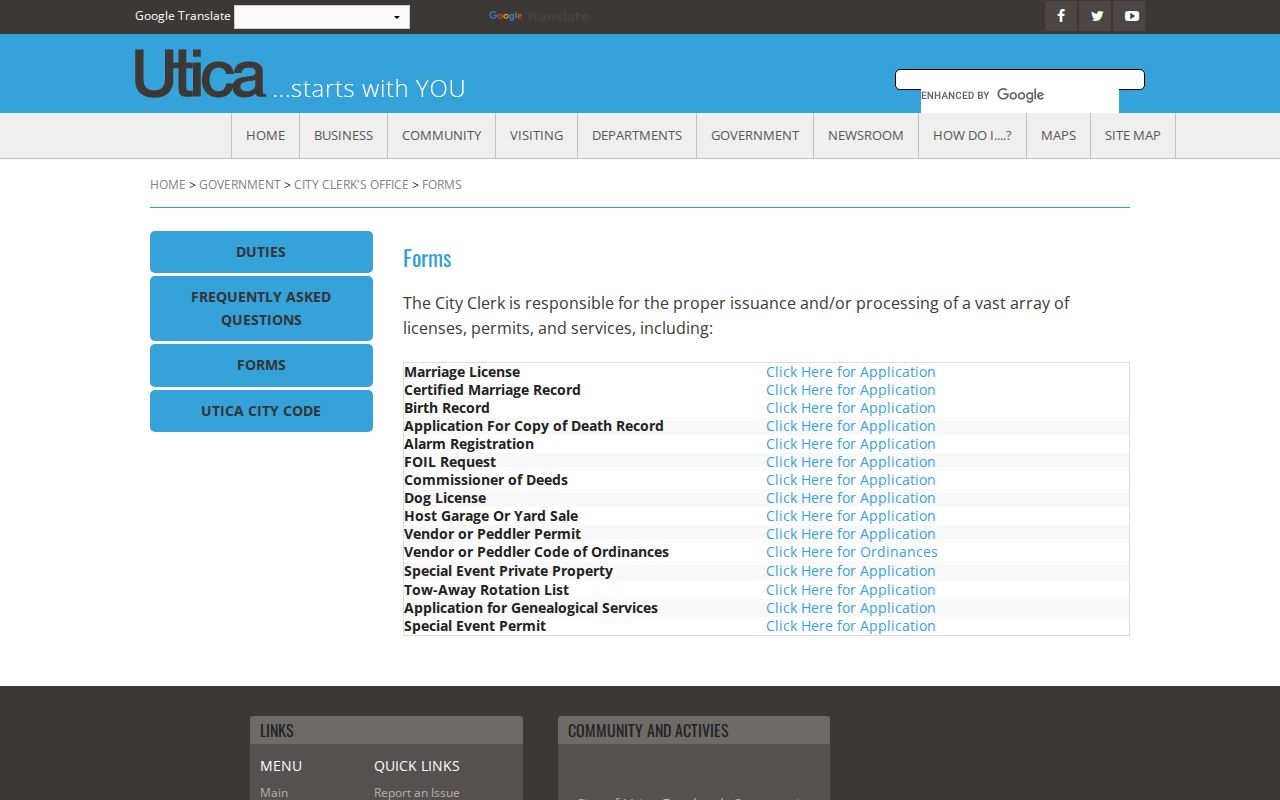
Utica's FOIL application wants the basics first. It asks for contact information, delivery preference, a detailed record description, date, and signature. The City posts its form, email, and mail channels. Every request still meets access review and exemptions.
Note: A focused request for one existing Utica record beats an open-ended demand for everything about a person.
Utica Vital Record Exception
The Utica Vital Records office holds births and deaths from 1876 forward. Those records are confidential. Certified access follows the City's eligibility instructions. Browsing names is not what this system allows. Historical work runs through State genealogy requests and Archives index guidance, each with its own age, eligibility, and processing rules. The right route turns on the event, the date, the location, and legal access.
One local wrinkle deserves attention. The City says a birth at St. Luke's Hospital after May 1957 must go through the New Hartford Town Clerk. Confirm the event location before filing a City request. The County Clerk keeps no vital records, even for events tied to Oneida County.
Utica Privacy Boundaries
Privacy limits shape what any Utica residents directory can ever show. Vital records carry eligibility rules. Courts seal protected matters. Election law restricts voter rolls. New York's Address Confidentiality Program gives eligible participants a substitute address, and confidential voter registration shields qualifying voters. Vehicle records will not reveal an owner from a plate or a driver from a name, so a legitimate Utica research trail ends where the responsible custodian marks information protected.
Lawful use. Use Utica records for personal, lawful research and source verification. Do not use any result to stalk, harass, intimidate, or harm another person; respect protected addresses and the custodian's access rules.
Utica Court and Custody Sources
Keep Utica court and custody work source-specific. Electronic court systems skip some courts, filings, and documents. Protected records stay closed. A County Clerk-held file may reach you through an online route, a public terminal, or a directed request. The route depends on the court and record type. A case caption, charge, index hit, or similarly spelled name is not a complete legal history. It is also not an identity finding. Weigh the court, the date, and the party role. Weigh any posted access limit before drawing a conclusion. The Oneida County Sheriff inmate list is the local current-custody starting point.
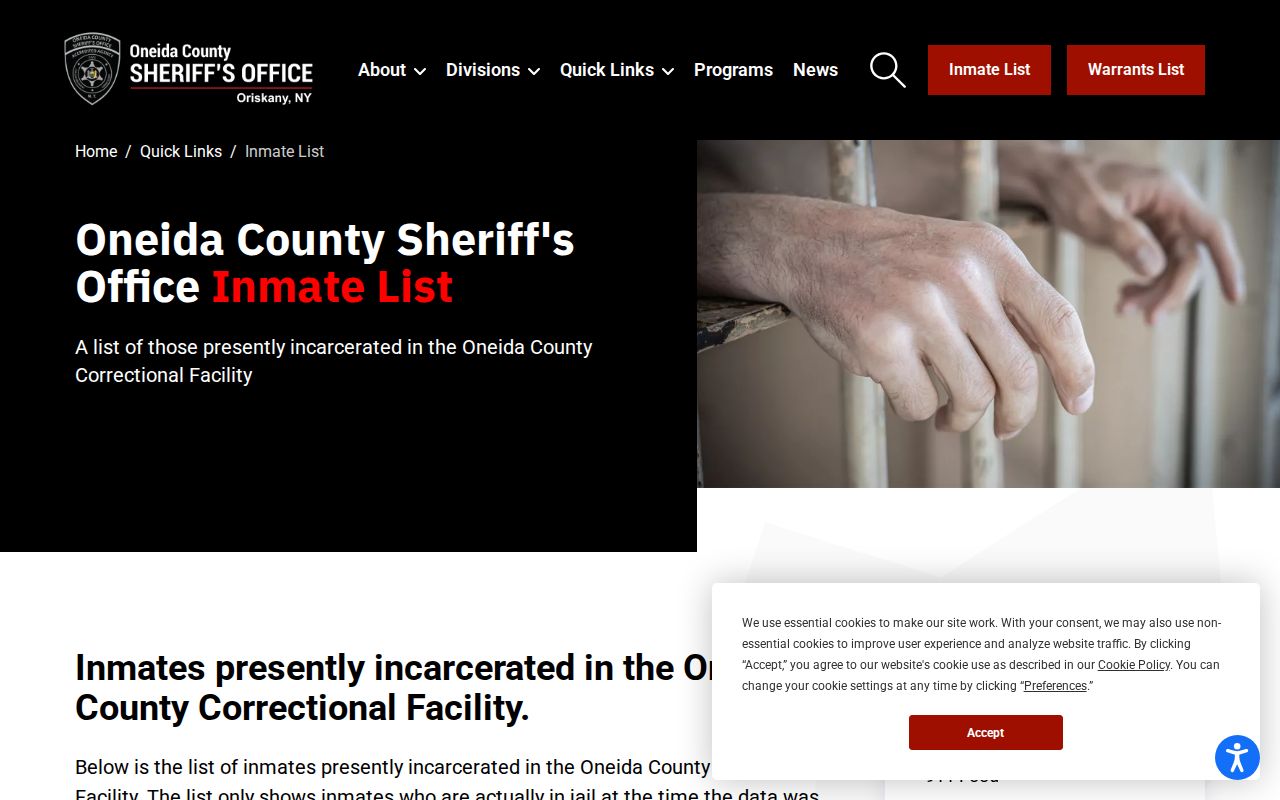
The Sheriff's Utica custody list shows fields like name, age, booking date, charges, and charge details. The Sheriff updates it about every six hours. A booking or charge is not a conviction. Separately, the New York Sex Offender Registry public search is a State system with constrained public choices.
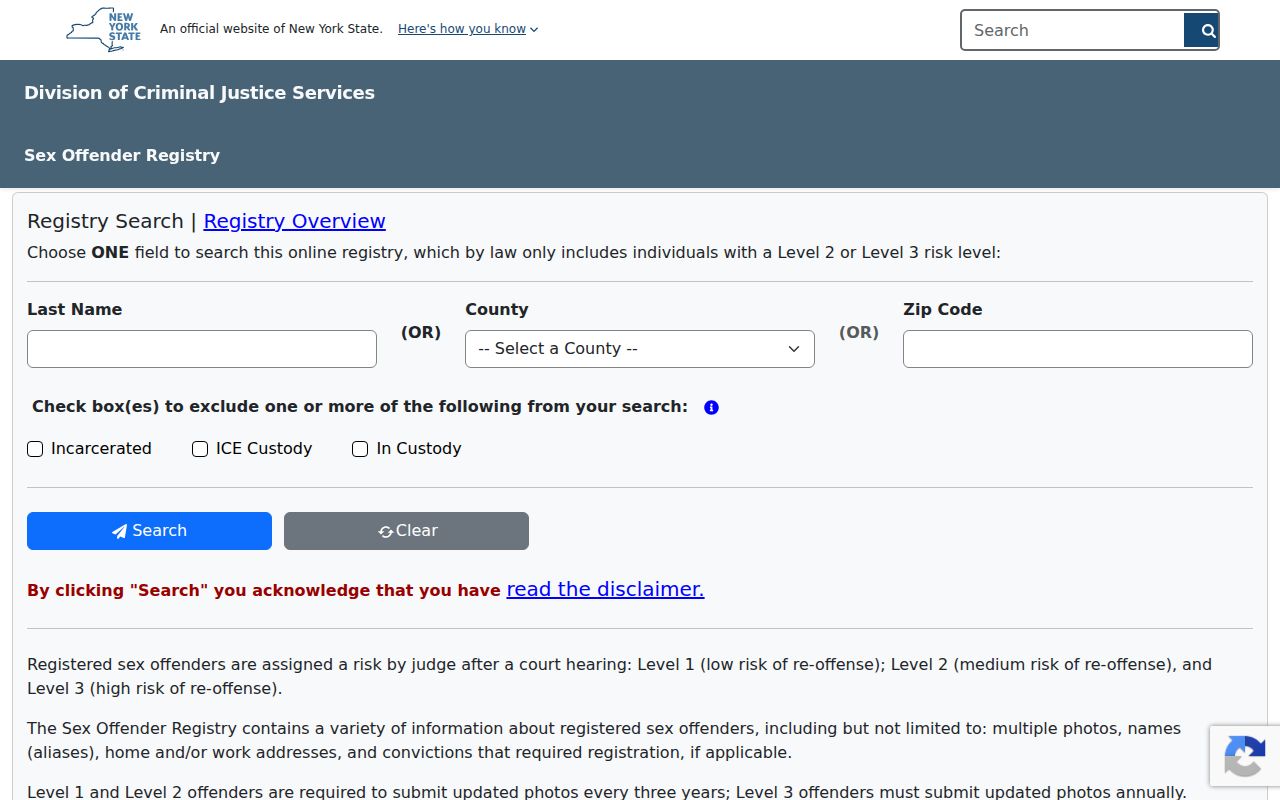
The State interface allows one search choice at a time: last name, county, or ZIP Code. Custody exclusions apply. That narrow public scope does not turn the registry into a general Utica residents directory or a personal-risk conclusion.
Utica's Historical Resident Sources
City directories often answer a dated Utica household question. The Utica Public Library's digitized collection starts in 1817. It runs through 1951 in selected years, with gaps. A Utica entry may print a name, trade, work location, and a residence notation marked "r." That is evidence for the edition's timeframe alone. It proves no present residence or ownership. Nor did every Utica household get listed.
Pick the edition closest to a known event, keep the exact wording and page image, then compare one available edition before or after. For fuller holdings and an entry-reading method, use the Utica city directory resource. Pair an historic Utica address with a period map, newspaper, cemetery source, or recorded document only when the names, dates, and places align.
Utica Historical Research Shelves
The Utica Public Library Genealogy Room holds city directories from 1817, cemetery inscriptions, yearbooks, State vital-index microfiche, census tools, and newspaper microfilm starting in 1825. Some network resources work only inside the Library. Genealogy Room hours with staff are limited. So when a digitized Utica year is missing, ask the reference service, check State Library microform holdings, or try an institutional archive. Do not assume the record never existed.
The Oneida County History Center is another Utica stop. It offers local documents, images, cemetery material, and historical context. Its Utica research library takes visits by appointment. The County Clerk's Regional Records Center, meanwhile, identifies Utica and Rome directories, newspapers, historic deeds, and mortgages. These Utica shelves support an evidence ladder. Scan first, visit a repository for the gap, then go to the record custodian for an official copy.
Utica Fraud Alerts Compared
The Oneida County Clerk offers a free Fraud Alert with a focused Utica property safeguard. The County says email or text notice goes out within 24 hours when a newly recorded deed or mortgage matches your submitted name or address. Daily conveyance notices are now issued too. The alert helps you check a new recording promptly. But it does not decide title. It does not prove a filing correct, and it never replaces direct review of the Utica instrument and its related record.
| Utica tool | What it provides | What still needs review |
|---|---|---|
| County Clerk Fraud Alert | Notice of a matching newly recorded deed or mortgage | The actual instrument, parties, parcel context, and any title question |
| Assessment or tax record | Dated parcel and assessment fields | Whether a recorded change is valid or who presently occupies a property |
| County recorded-document route | Accessible document index or image path | Identity, complete chain of title, and any conclusion beyond the record |
Preserve the reference. Verify any unexpected Utica filing through the Clerk's published route, and ask the responsible office about correction or access procedure. A Utica source date and document image remain more reliable than a message or an unsupported match.