
Finding Utica Residents by Record
Utica residents leave different kinds of dated public traces. A Utica street address belongs first with City assessment and tax material. A name tied to a Utica sale, mortgage, judgment, or map belongs with the Oneida County Clerk. An older address belongs with Utica directory volumes and local-history collections. A Utica City administrative record belongs with its department or the City Clerk. Keeping those roles separate makes a Utica residents directory useful: a parcel record can establish land context, a deed can identify its recorded parties, and a printed directory can place a name at an address for one edition.
Start with the most exact detail already available. For a recent Utica address, preserve the house number, street spelling, parcel number, and source date. For a historic Utica name, preserve the edition year and exact printed spelling. No one source proves every part of a household story. A property location can differ from an owner mailing address, and a historic Utica listing is not a statement about the present. Use a second record when a conclusion depends on identity.
- For a current Utica property question, use the City tax route or annual assessment roll to identify the parcel and distinguish property location from mailing fields.
- For a named Utica recorded-document question, use the County Clerk instructions, then review the actual document or public-terminal result.
- For a voter-status question, use the individual fields required by the State form or contact the Oneida County Board of Elections.
- For a past Utica household, select the closest available Utica directory year and compare adjacent editions when they exist.
- For a non-posted City or County record, ask the custodian which request route applies and describe the record, date range, and location narrowly.
Utica Offices for Resident Records
Utica searches work best when the office matches the question. The County Clerk records instruments and keeps historical material. The City Assessor handles the annual roll and property route. The Board of Elections handles local registration and election procedure. The City Clerk is the municipal Records Access Officer for Utica City-held material. These Utica offices do not operate one combined residents directory, so the record category and the source date should travel with every note.
The Oneida County Clerk maintains the county office that files land and court records.
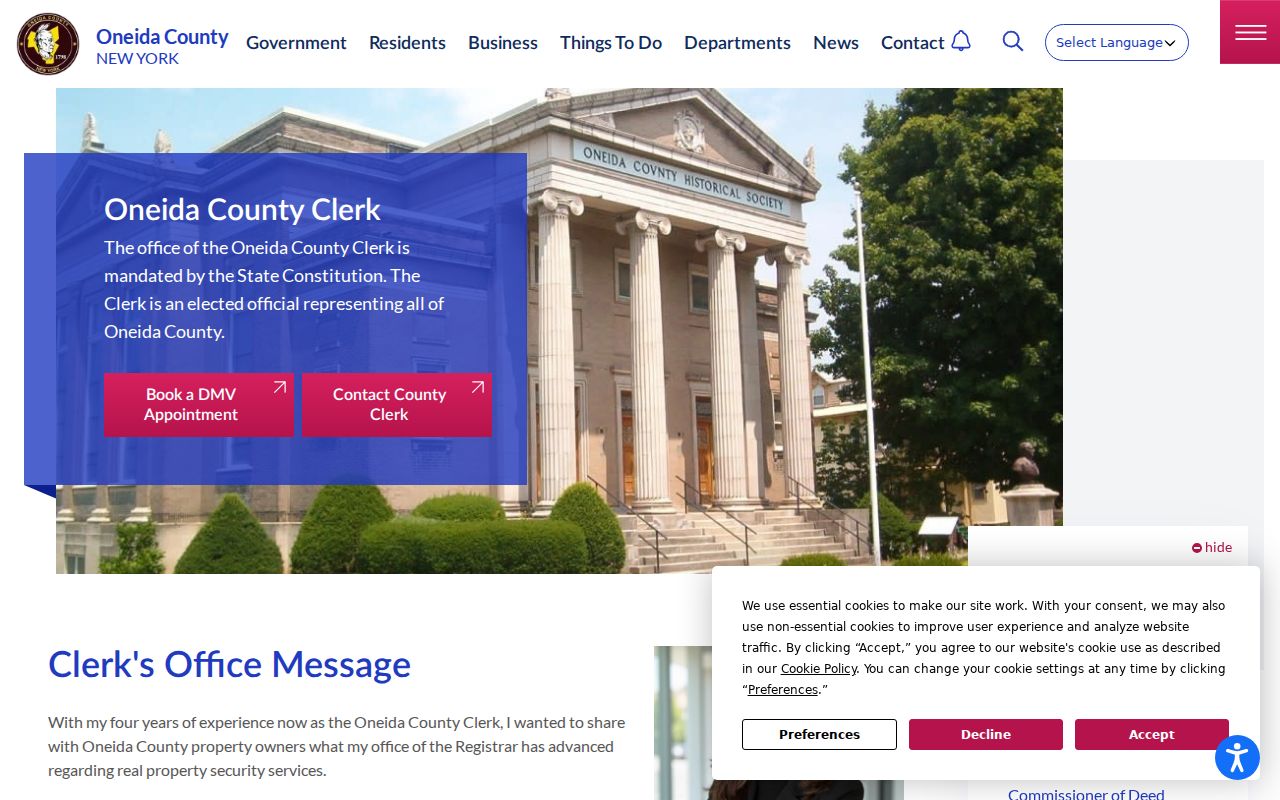
For Utica deed, judgment, map, and historic-record questions, the Clerk supplies the right first contact and directs users to its separate search and request channels.
Oneida County Clerk
800 Park Avenue
Utica, NY 13501
(315) 798-5776
County Clerk records and office details
City of Utica Assessor
1 Kennedy Plaza
Utica, NY 13502
(315) 792-0125
Utica property-search gateway
Oneida County Board of Elections
321 Main Street, third floor
Utica, NY 13501
(315) 798-5765
Utica Tax Records by Field
The Utica tax self-service form accepts one route at a time: house number and street name, parcel ID, or bill number. For an address search, Utica instructs users to enter the street name without a suffix such as ST, AVE, or LN. The posted tax-history statement reaches back to fiscal year 2011/12. That makes the screen a direct Utica parcel and bill tool, not a complete residents directory or an address-to-person match.
| Utica field | Input format | When to use it | Important limit |
|---|---|---|---|
| House number | Number in its own field | Start an address search | Pair it with the street-name field |
| Street name | Name without ST, AVE, or LN | Find a Utica street record | Exact spelling can affect results |
| Parcel ID | Local parcel identifier | Connect a known Utica parcel | It is not an individual identifier |
| Bill number | Bill reference | Review a known tax bill | It does not identify a household |
The City of Utica Assessor is the official entry point for the annual roll and property-search link.
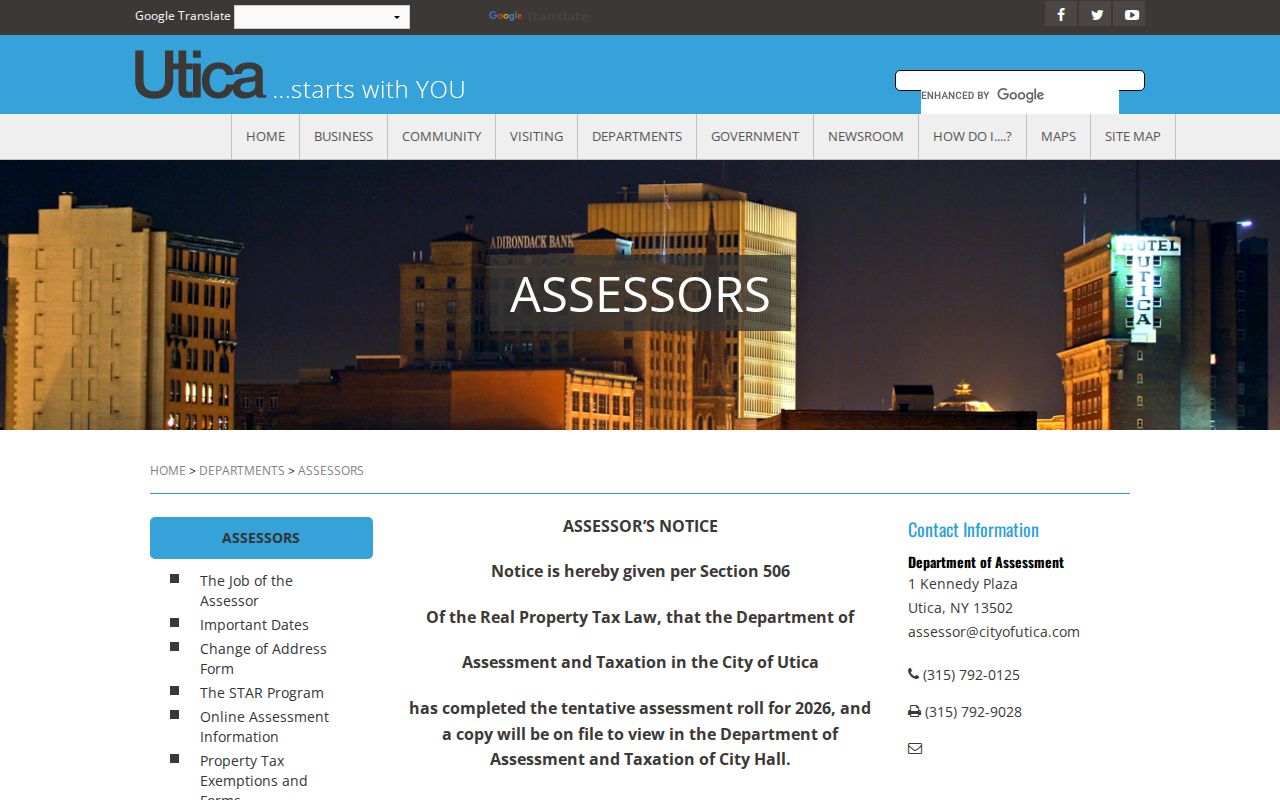
A Utica assessment record can include owner and mailing fields, property location, class, assessment, exemptions, parcel data, market value, and deed-reference context. Read each Utica field for what it says, rather than merging a mailing address with a property location.
Note: A Utica tax result is a dated property record and should not be treated as proof of current household membership.
Utica Deed Index Routes
Recorded-document research for Utica moves through the County Clerk rather than the City tax screen. County instructions send a guest user to SearchIQS, where the verified path is Party 1 with the name entered last name first, the DEED document description, and a result selected by matching name, date, and town. A deed is a recorded instrument, and its parties are the names printed on that transaction. That does not establish present residence or settle every ownership question.
The County public-record search and request guide describes the fuller Utica access ladder.
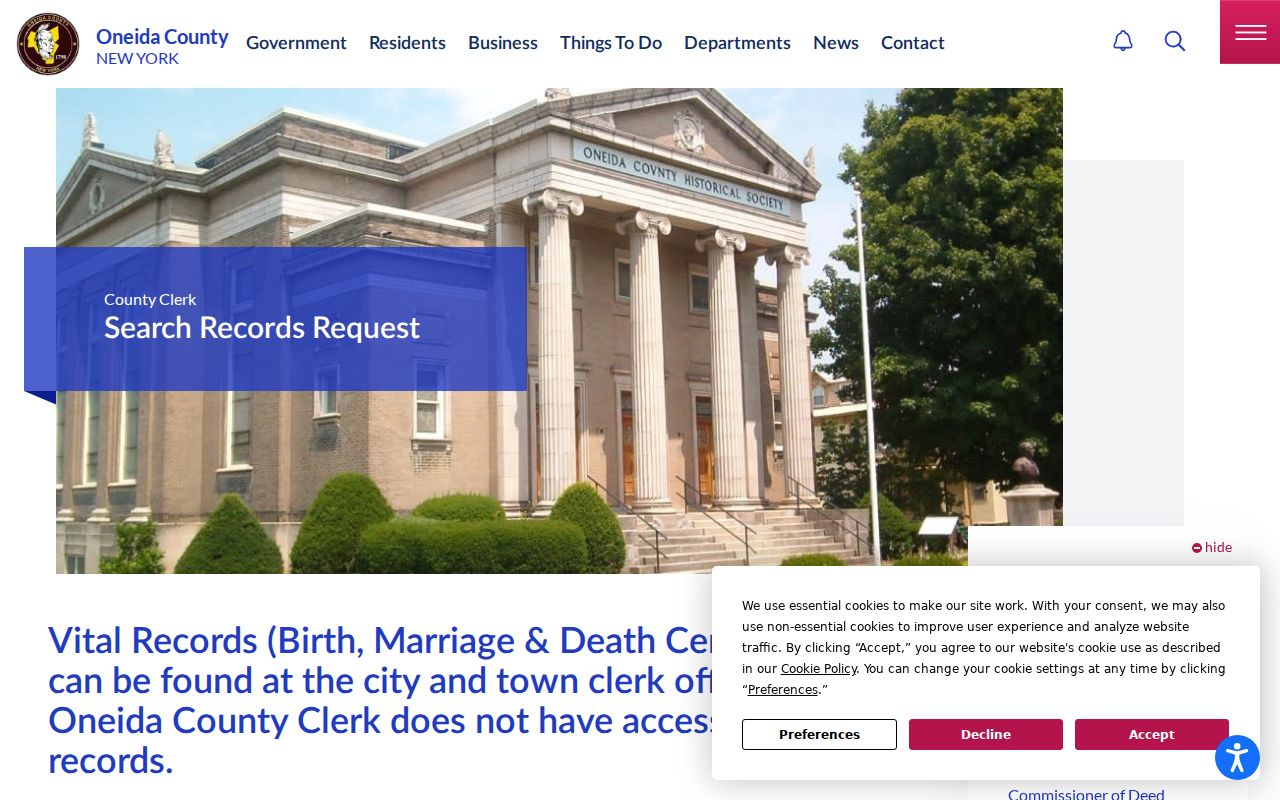
For most Utica land records and judgments from the early 1990s forward, the County points users to its online route. A missing online result can call for free public-computer research, archival books, a directed mail search, or a known-document copy request. The County posts 65 cents per page with a $1.30 minimum for copies, while its directed search has its own named-person, time-period, and category fee.
- Party 1
- The County instruction label for the name field used in its documented guest deed-search path.
- Deed
- A recorded instrument transferring an interest in land. It names parties to that recorded transaction.
- Liber and page
- A traditional book-and-page reference that may help locate a known County record or copy request.
- Public terminal
- An in-person Clerk research computer, useful when the online index or image does not answer the Utica question.
Utica Parcel Maps and Residents
Oneida County's official parcel viewer adds geographic context to a Utica address. County material describes parcel owner, address, assessed value, acreage, imagery, and layers for floodplains, wetlands, contours, school districts, sewers, and soils. Those layers help a Utica researcher recognize parcel shape, a boundary, or a mapped feature. They do not make a parcel label a residents directory, prove a person lives there, or establish a personal relationship between nearby properties.
Use a Utica address to locate the parcel, compare the City parcel or tax-map reference, then keep the source roles distinct: address to parcel, parcel to assessment context, and recorded instrument to its printed parties. For a full address-first sequence across the City and County systems, the Utica street directory route keeps the street-level work in one place.
Note: An adjacent Utica parcel is geographic context only, not evidence about a neighbor's identity, residence, or willingness to be contacted.
Utica's Current Resident Sources
Current Utica sources answer narrow questions. The annual roll and tax route show assessment and property data. The State voter form confirms an individual Utica registered voter's election information with required fields. The Clerk index identifies parties to accessible recorded instruments. A professional-license result identifies an issued credential within the selected State profession. The County Sheriff's list reports current custody information within that system. Together, those sources are more accurate than treating a single Utica residents directory as a complete roster.
| Utica source | What it can show | Custodian | Access and boundary |
|---|---|---|---|
| Assessment roll and tax route | Property, owner, mailing, parcel, and tax context | City Assessor | Published roll or self-service route; property data is not a current-residence finding |
| Voter confirmation form | Registered-voter election information | New York elections system | Individual fields required; not an address roster |
| Recorded-document index | Parties and details in accessible instruments | Oneida County Clerk | Guest, terminal, request, and archive routes vary by record |
| Professional verification | License status in a selected profession | NYSED | Credential context, not a current-address confirmation |
| County custody list | Listed custody fields and charges | Oneida County Sheriff | Updated on the Sheriff's schedule; a booking is not a conviction |
When the goal is to check one specific Utica name against sources that use different fields, preserve the date and meaning of each result through a Utica resident lookup process.
Utica Voter Lookup Fields
New York Voter Lookup is a registered-voter confirmation form, not a Utica residents directory by street or ZIP. It asks for County, last name, first name, date of birth in MM/DD/YYYY format, ZIP Code, and a search submission. Select Oneida for a Utica voter question. The form's fields matter because they prevent a name-only result from being mistaken for an identity match.
For a local Utica registration, ballot, district, or procedure question that the State form cannot answer, the Board of Elections is the responsible office. Registration records are governed by election law, protected identifying material is excluded, and qualifying voters may have confidential registration. A postal ZIP, parcel, and election district are different systems, even when all relate to the same Utica address.
Utica ZIP Systems Compared
Utica postal labels are useful for delivery verification, but they do not draw a neighborhood or City boundary. The USPS ZIP Code Lookup can find a ZIP by address, find a ZIP by city and state, or find cities by ZIP. A USPS result does not verify a person or organization at that address. Use it to standardize a Utica mailing result, then return to the City tax route or County parcel tools for the street and parcel.
A Utica ZIP Code is postal routing. A Census ZCTA is a statistical approximation. An Utica E911 address is a local number-and-street assignment. A parcel is a land-record unit, and an election district is election geography. The distinction is practical: 13501, 13502, 13503, and 13504 appear in Utica postal context, while 13505 and 13599 were combined to 13502 in Postal Bulletin changes. Verify the exact current Utica delivery address instead of inferring a boundary from a familiar code.
Utica FOIL Record Requests
New York Freedom of Information Law, Public Officers Law article 6, sections 84 through 90, gives a route to existing agency records subject to exemptions. A Utica request is stronger when it asks for an identified document class, date span, department, and address, parcel, project number, or meeting. It should not ask an office to create a broad people list or decide whether people with similar names are the same person. The Utica City response path is the City Clerk as Records Access Officer.
- Identify the Utica department that holds the record, such as the Clerk, Codes, Assessor, or a County office.
- Describe the existing record and narrow the request by date, address, parcel, project, meeting, or document type.
- Choose inspection, electronic delivery, or copies where the form offers that choice.
- Use the County Clerk's own search or copy route first for deeds, maps, judgments, and indexed court material.
- Keep the request confirmation and any response date with the Utica research notes.
The Utica City Clerk forms index identifies the municipal request and record routes.
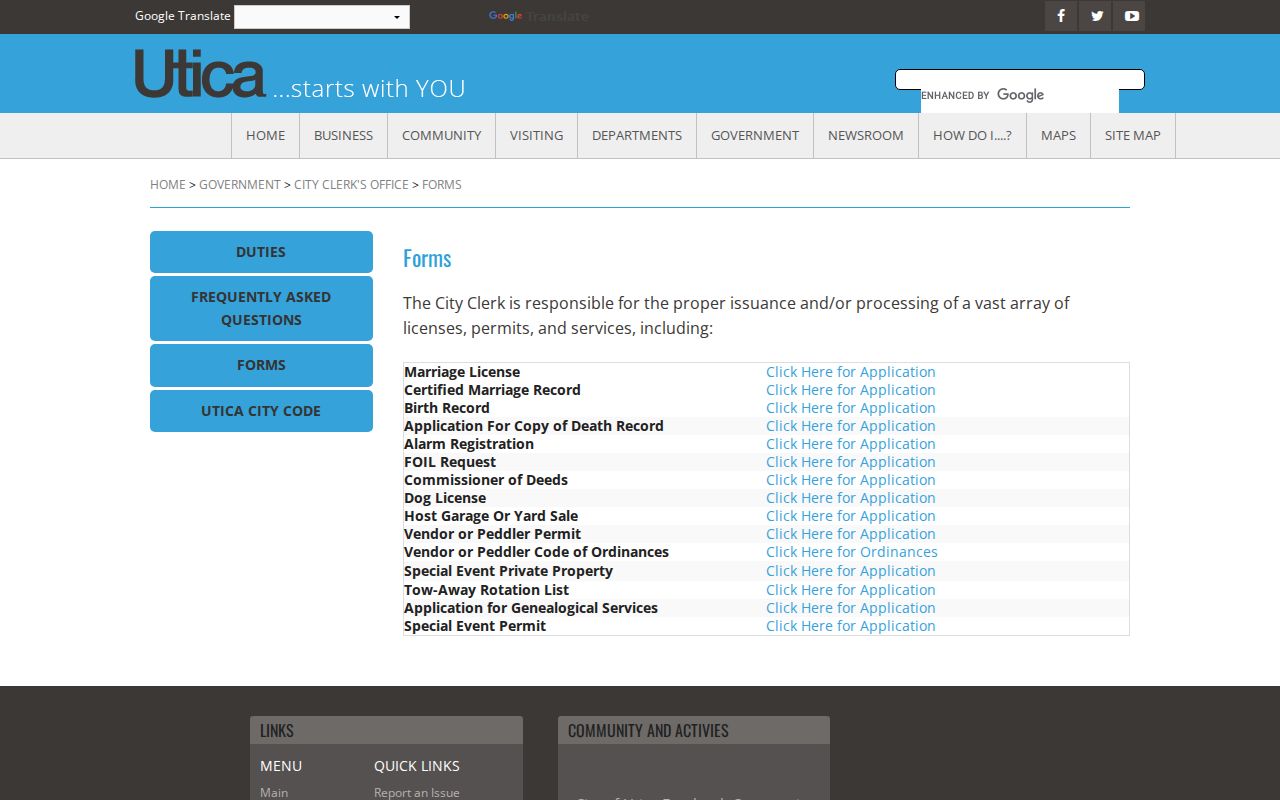
The Utica City FOIL application requests contact information, delivery preference, a detailed record description, date, and signature. The City posts its form, email, and mail channels, while a request remains subject to the applicable access review and exemptions.
Note: A focused Utica request for an existing record is more useful than an open-ended request for all material about a person.
Utica Vital Record Exception
The Utica Vital Records office keeps births and deaths from 1876 forward, but those records are confidential and certified access follows the City's eligibility instructions. Utica records are not a public name-browsing system. For historical work, State genealogy requests and Archives index guidance have separate age, eligibility, and processing rules. The correct route depends on the event, date, location, and legal access status.
One local detail matters: the City says a birth at St. Luke's Hospital after May 1957 must be requested through the New Hartford Town Clerk. That Utica exception is a reason to confirm the event location before starting a City request. The County Clerk does not keep vital records, even when the event is associated with Oneida County.
Utica Privacy Boundaries
Utica record access has clear limits. Vital records have eligibility rules, court systems exclude sealed or protected matters, and voter information has election-law restrictions. The New York Address Confidentiality Program provides a substitute address for eligible participants, and confidential voter registration protects qualifying voters. Vehicle records are not a route for identifying an owner from a plate or a driver from a name. A legitimate Utica research trail stops when the responsible custodian marks information protected.
Lawful use. Use Utica records for personal, lawful research and source verification. Do not use any result to stalk, harass, intimidate, or harm another person; respect protected addresses and the custodian's access rules.
Utica Court and Custody Sources
Utica court and custody information should remain source-specific. Electronic court systems do not include every court, filing, or document, and protected records remain unavailable. For a County Clerk-held file, the online route, public terminal, or directed request may differ by court and record type. A case caption, charge, index hit, or similarly spelled name is not a complete legal history or an identity finding. Check the court, date, party role, and posted access limit before drawing a conclusion.
The Oneida County Sheriff inmate list is the local current-custody starting point.
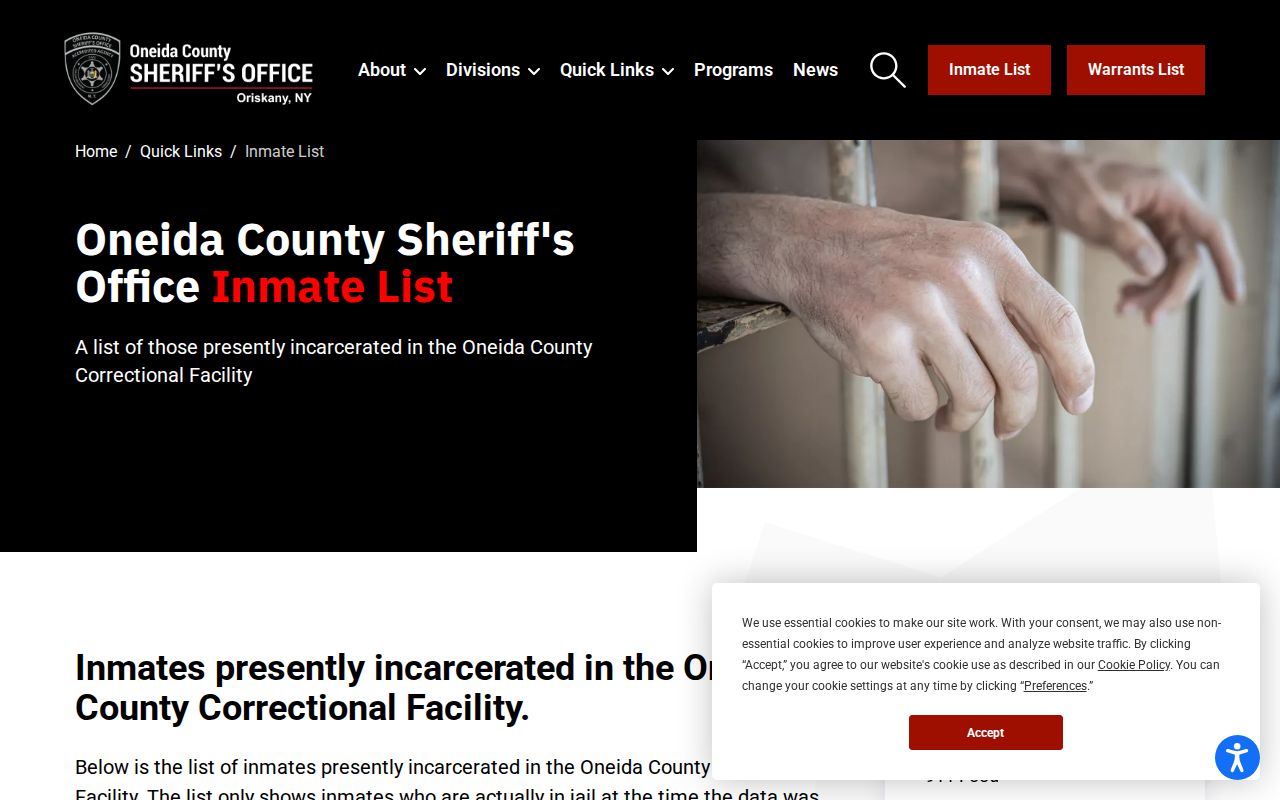
The Sheriff's Utica custody list identifies fields such as name, age, booking date, charges, and charge details, and the Sheriff states that it is updated about every six hours. A listed booking or charge is not a conviction.
The New York Sex Offender Registry public search is a separate State system with constrained public choices.
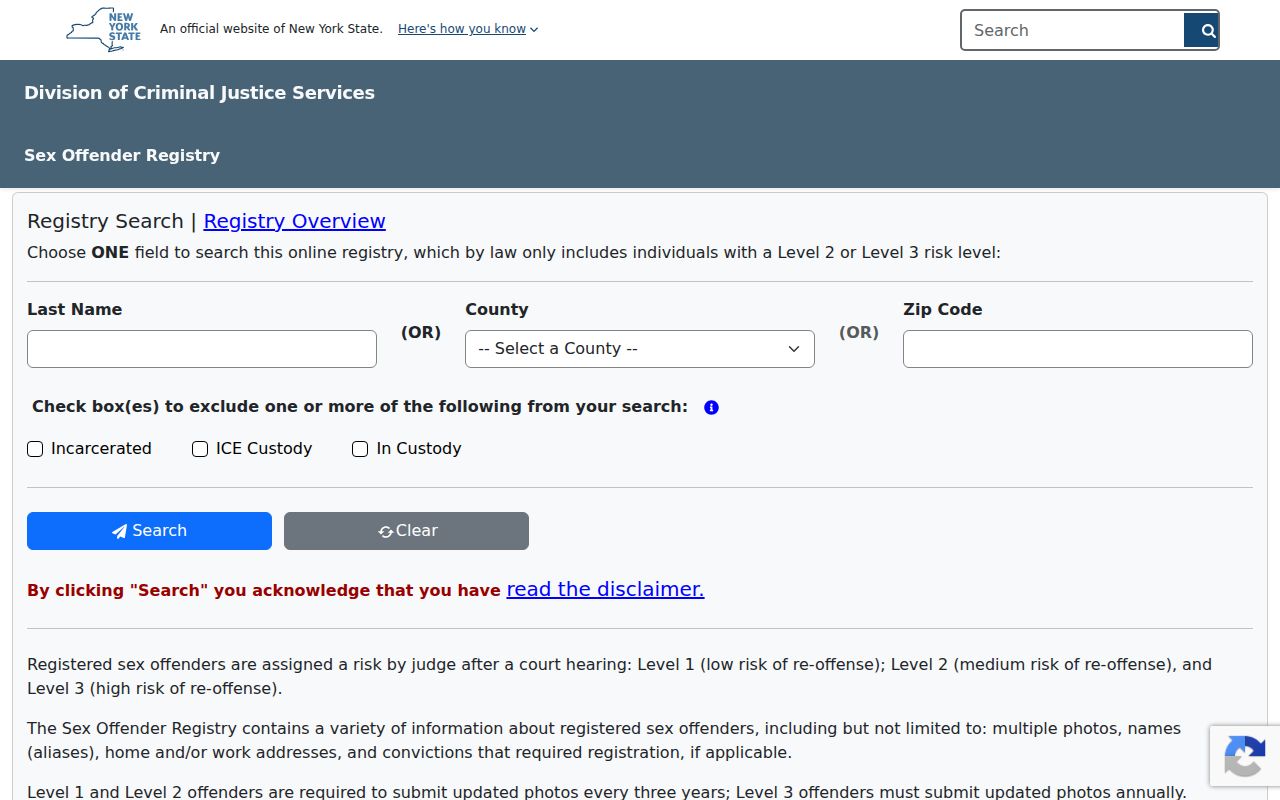
The State public interface permits one search choice at a time, last name, county, or ZIP Code, and has custody exclusions. Its public scope does not turn the registry into a general Utica residents directory or a personal-risk conclusion.
Utica's Historical Resident Sources
For a dated Utica household question, city directories are often the most direct local source. The digitized collection at the Utica Public Library begins with 1817 and has selected years through 1951, with gaps. A Utica entry may record a printed name, trade, work location, and a residence notation marked "r." That is evidence for the edition's timeframe, not a present residence, ownership conclusion, or a promise that every Utica household was listed.
Choose the Utica directory year closest to a known event, preserve the exact wording and page image, then compare one available edition before or after. For the fuller collection, holdings, and entry-reading method, use the Utica city directory resource. Pair an historic Utica address with a period map, newspaper, cemetery source, or recorded document only when the names, dates, and places align.
Utica Historical Research Shelves
The Utica Public Library Genealogy Room adds city directories from 1817, cemetery inscriptions, yearbooks, State vital-index microfiche, census tools, and newspaper microfilm beginning in 1825. Some network resources are available only inside the Library, and staffed Genealogy Room hours are limited. When a digitized Utica year is missing, the Library's reference service, State Library microform holdings, or an institutional archive are better next steps than assuming the record never existed.
The Oneida County History Center is another Utica research stop for local documents, images, cemetery material, and historical context. Visits to its Utica research library are by appointment, while the County Clerk's Regional Records Center identifies Utica and Rome directories, newspapers, historic deeds, and mortgages. These Utica shelves support an Utica evidence ladder: scan first, visit a repository for the gap, then use the appropriate record custodian when an official copy is needed.
Utica Fraud Alerts Compared
The Oneida County Clerk's free Fraud Alert offers a focused Utica property safeguard. The County says it sends email or text notice within 24 hours when a newly recorded deed or mortgage matches the submitted name or address, and it now issues daily conveyance notices. The alert is useful for checking a new recording promptly. It does not decide title, prove that a filing is correct, or replace direct review of the Utica instrument and related record.
| Utica tool | What it provides | What still needs review |
|---|---|---|
| County Clerk Fraud Alert | Notice of a matching newly recorded deed or mortgage | The actual instrument, parties, parcel context, and any title question |
| Assessment or tax record | Dated parcel and assessment fields | Whether a recorded change is valid or who presently occupies a property |
| County recorded-document route | Accessible document index or image path | Identity, complete chain of title, and any conclusion beyond the record |
For an unexpected Utica filing, preserve the reference, verify it directly through the Clerk's published route, and ask the responsible office about correction or access procedure. A Utica source date and document image are more reliable than a message or an unsupported match.